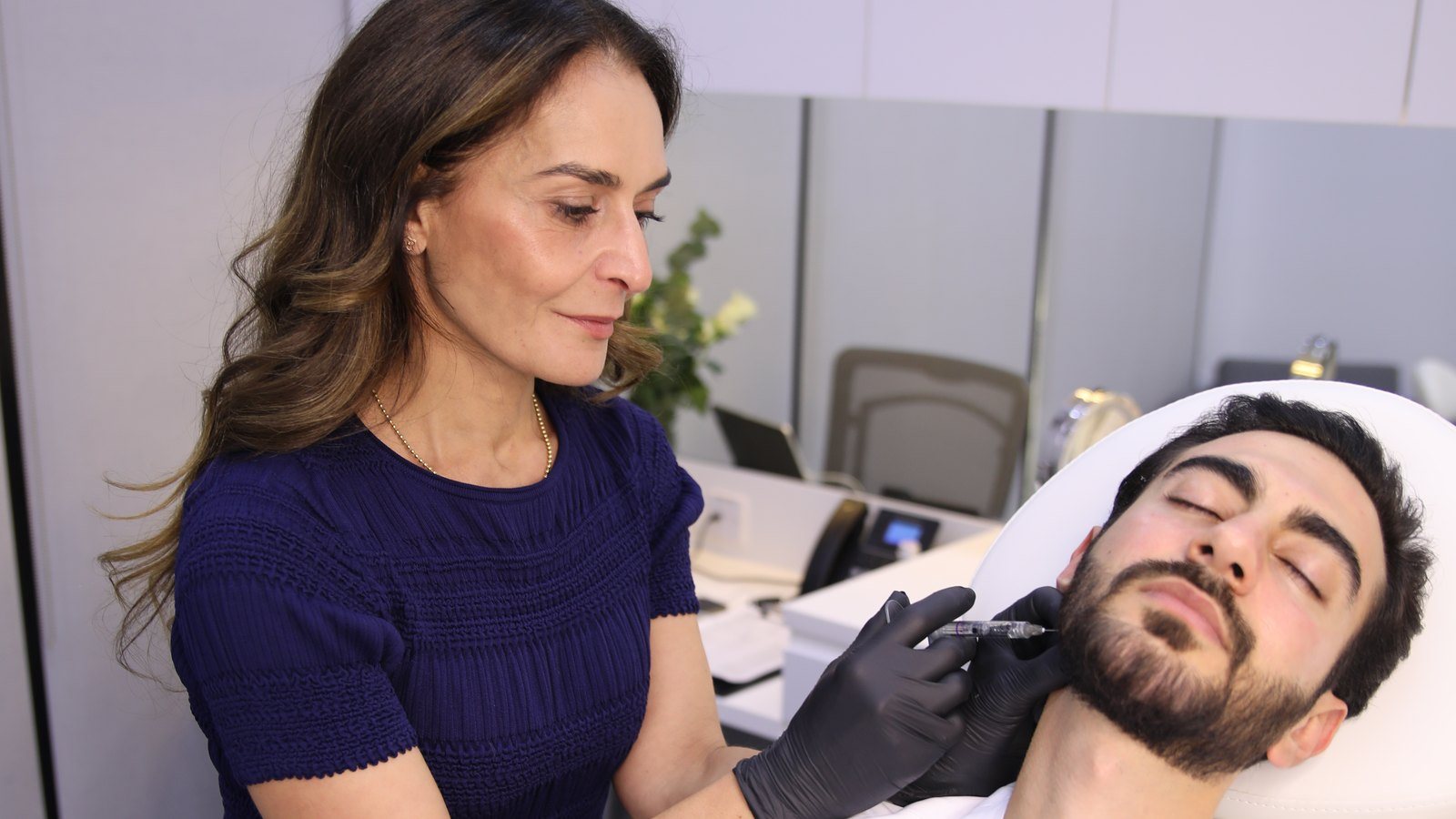
Aesthetic treatments for men: does testosterone matter?
Medically reviewed by Dr Suha Kersh, Co-Founder & Lead Aesthetic Doctor · Published 1 November 2026 · Last reviewed 1 November 2026
Quick answer: Testosterone matters, but not in the way most men expect. It shapes men's skin, hair and where fat is stored, yet aesthetic treatments don't raise or replace it. If you also have tiredness, low drive or new weight around the middle, a hormone check may come first. Otherwise, treatments are chosen for male skin and anatomy.
Questions about your own situation? Message our team on WhatsApp: London · Dubai
How is men's skin different from women's?
Men's skin is generally thicker, oilier and better hydrated than women's. A 2018 review of 57 studies comparing male and female skin found that thickness, sebum (the skin's natural oil), hydration, blood flow and pigmentation are generally higher in men [1]. Much of this difference comes from androgens, the group of hormones that includes testosterone.
These differences change how treatment is planned. Thicker, oilier skin can hide fine lines for longer, so men often notice change later and then all at once: a softer jawline, heavier lower face or deeper lines between the brows. Larger pores and more oil also affect which skin treatments suit and how the skin is prepared.
Does low testosterone change how your skin and body look?
Low testosterone can change body shape more clearly than it changes skin. Studies show that muscle loss and fat moving to the middle of the body are among the symptoms some men notice in their late 40s and 50s [2]. Testosterone falls gradually, by about 1% a year from around 30 to 40, and this alone is unlikely to cause problems [2].
The link runs both ways. A 2013 analysis of 24 studies found that men who lost weight saw their testosterone rise, and the more weight they lost, the larger the rise [5]. In men whose testosterone is genuinely low, trials of medical treatment show less fat and more lean mass on average, but this is a medical decision made after proper testing, not a cosmetic one [4].
What the evidence does not show is that a cosmetic treatment can fix a hormone problem. A treatment that tones muscle or reduces a pocket of fat won't change your testosterone, energy or drive.
Does testosterone cause hair loss?
Male pattern hair loss is driven by genes and by dihydrotestosterone (DHT), a hormone the body makes from testosterone, rather than by having "too much" testosterone. The British Association of Dermatologists explains that DHT gradually shrinks susceptible hair follicles, and that this pattern affects about half of men over 50 [3]. It also notes that most treatments work only while they are continued [3].
Because hair thinning can also reflect thyroid problems, low iron or illness, a doctor should look at the cause before you choose a treatment.
Which aesthetic treatments do men ask about most?
The right treatment depends on what has changed. This table sets out common concerns, what may help at 23MD, and the limits of each.
| What you notice | What may help | What it won't do |
|---|---|---|
| Softer jawline or chin | Dermal fillers, placed to suit male facial structure | Tighten loose skin |
| Dull, dry or uneven skin | Skin boosters for hydration and texture | Change facial shape |
| Stubborn fat with less muscle tone | EMSCULPT NEO, a contouring course | Replace weight loss or raise testosterone |
| Thinning hair | Scalp treatments such as polynucleotides for hair | Change a genetic hair-loss pattern; evidence is early |
The evidence differs by treatment. For body contouring, one sham-controlled trial of 72 people found that radiofrequency combined with muscle stimulation reduced abdominal fat by about 28% and increased muscle thickness by about 24% at three months, with a small fall-off by six months [6]. Studies of these devices are mostly small, and results vary from person to person.
Men's faces are also treated differently. The aim is usually to keep a strong, angular jawline and avoid softening the face, which is why Dr Kersh assesses skin, structure and movement together before suggesting anything. Why hormones are read before the skin is treated explains how the two fit together.
When should a hormone check come before a cosmetic treatment?
A hormone check makes sense first when appearance changes come with other symptoms. These include low energy, poor sleep, low mood, low sex drive, loss of muscle despite training, or new weight around the middle. The NHS points out that stress, sleep, alcohol and other lifestyle factors can cause many of the same symptoms [2], so a proper assessment looks at all of them.
Testosterone deficiency is diagnosed from symptoms and blood tests, not from appearance [2]. Our page on low testosterone symptoms sets out what a men's health assessment involves. Treatment options, if any are needed, are discussed at consultation.
The 23MD view
"Many men come in asking for a sharper jawline when what has really changed is their energy, their training and their weight. We look at both. Sometimes the right first step is a blood test, not a syringe. When aesthetic treatment is right, we plan it around a man's own structure, so he looks rested and like himself, not 'done'."
Who this is for, and who it isn't for
This may suit men who:
- have noticed changes in their jawline, skin texture, body shape or hair and want to understand the options;
- want a plan that looks at hormones and appearance together;
- prefer subtle, natural-looking results.
This isn't for men who:
- are looking for a cosmetic treatment to fix low energy, low drive or mood;
- want body contouring instead of weight loss, when weight loss is the main goal;
- have symptoms that need medical assessment first, such as sudden hair loss or unexplained weight change.
Suitability and results vary. Your doctor will discuss benefits, risks and alternatives at consultation.
Frequently asked questions
Do men need different aesthetic treatments from women?
Men often use the same treatments, planned differently. Thicker, oilier skin and a different facial structure change product choice, placement and the skin preparation needed [1].
Can low testosterone make you look older?
Low testosterone can contribute to muscle loss and fat around the middle [2]. Skin changes with age are mostly driven by sun exposure, genes and lifestyle. A doctor can help separate the two.
Will EMSCULPT NEO raise my testosterone?
No. EMSCULPT NEO is a contouring treatment for muscle and fat in a treated area. It is not a hormone treatment and not a weight-loss programme.
Is hair loss a sign of high testosterone?
Not usually. Male pattern hair loss reflects how sensitive your follicles are to DHT, which is largely inherited [3].
Should I have a blood test before aesthetic treatment?
Not always. It is worth considering if you also have symptoms such as tiredness, low drive or new weight gain. Your doctor will advise at consultation.
Planning more than one treatment? Tell our Treatment Stacker your goal and timeline, and it will draft a sequenced plan for a 23MD doctor to review. Draft my stack. This is not a medical diagnosis. A 23MD doctor will confirm suitability at your consultation.
Talk to a 23MD doctor
Your first consultation lasts 45 to 60 minutes and starts with your health and goals, not a treatment list. Explore our men's health services, or message us:
- London: 23 Elystan Street, Chelsea. Message our London team on WhatsApp
- Dubai: The Court Residence, Jumeirah 1. Message our Dubai team on WhatsApp
23MD is a doctor-led clinic in Chelsea, London (since 2015) and Jumeirah 1, Dubai (since 2023).
References
- Rahrovan S, Fanian F, Mehryan P, Humbert P, Firooz A. Male versus female skin: what dermatologists and cosmeticians should know. International Journal of Women's Dermatology. 2018;4(3):122–130.
- NHS. The "male menopause". Accessed 31 October 2026.
- British Association of Dermatologists. Male pattern hair loss (androgenetic alopecia): patient information leaflet. Updated March 2016.
- Corona G, Giagulli VA, Maseroli E, et al. Testosterone supplementation and body composition: results from a meta-analysis study. European Journal of Endocrinology. 2016.
- Corona G, et al. Body weight loss reverts obesity-associated hypogonadotropic hypogonadism: a systematic review and meta-analysis. European Journal of Endocrinology. 2013;168(6):829–843.
- Samuels JB, et al. Radiofrequency heating plus electromagnetic muscle stimulation for abdominal fat and muscle. Plastic and Reconstructive Surgery. 2022. doi:10.1097/PRS.0000000000009030 (summary).