Ferritin face: can your face really show low iron?
Medically reviewed by Dr Martin Galy, Co-Founder & Director of Wellness & Longevity, and Dr Suha Kersh, Co-Founder & Lead Aesthetic Doctor · Published 20 November 2026 · Last reviewed 20 November 2026
Quick answer: Sometimes. Low iron can make skin look pale and tired, make dark circles more noticeable and cause cracks at the corners of the mouth. But none of these signs is specific to low iron: sleep, genetics, thyroid problems and other deficiencies can look the same. Your face can raise the question. Only a blood test can answer it.
Wondering about your own iron levels? Message our team on WhatsApp: London · Dubai
What is "ferritin face"?
"Ferritin face" is a social media term, not a medical diagnosis. It describes a tired, washed-out look that people put down to low iron stores: pale skin and lips, dark circles under the eyes and an exhausted appearance [1]. Ferritin is the protein that stores iron in the body, so a low ferritin level means your iron reserves are running low.
The term is new, but the interest is real. In the UK, searches for "ferritin face" went from almost none a year ago to about 9,900 a month (Google Keyword Planner, November 2026). Searches for "low ferritin symptoms" more than doubled over the same year.
Can low ferritin really show on your face?
Yes, low ferritin can show on the face, but the signs are not specific to low iron. Dr Galy explains that low iron can cause pallor, a paleness of the skin, and that pale skin makes dark areas around the eyes stand out more. Low iron can also cause:
- cracks at the corners of the mouth (angular cheilitis), which iron deficiency makes more likely [5];
- changes to the tongue, which can become smooth and sore;
- a generally tired, washed-out look.
The catch is that every one of these has other causes. Genetics, poor sleep, dehydration, ageing, thyroid conditions and other nutritional problems can produce the same look, and paleness is hard to judge across different skin tones [1]. So the face can suggest low iron. It can't confirm it.
What are the symptoms of low ferritin?
The most common symptom of low ferritin is tiredness. In Dr Galy's experience, three signs most often lead him to check a patient's iron and ferritin:
- Tiredness or lethargy.
- Changes to the skin: a pale, washed-out appearance.
- Cracks at the corners of the mouth.
Other symptoms people report include thinning hair, brittle nails and shortness of breath [1]. If several of these appear together, it's worth asking a doctor about a blood test rather than guessing.
Are people asking doctors about ferritin?
Yes, and long before the trend had a name. Dr Galy says patients often ask about their iron levels because of low energy, and many patients with dark shadows under their eyes ask to have their iron, ferritin and vitamin D checked. Social media has given an old question a new label.
What does a ferritin test show?
A ferritin test shows how much iron your body has stored. On its own, though, it can mislead. Ferritin also rises with inflammation or infection, because it acts as an acute-phase protein, which makes a single ferritin result unreliable as a measure of iron [4]. UK gastroenterology guidelines call ferritin the single most useful marker of iron deficiency, but recommend confirming it with other iron tests [2].
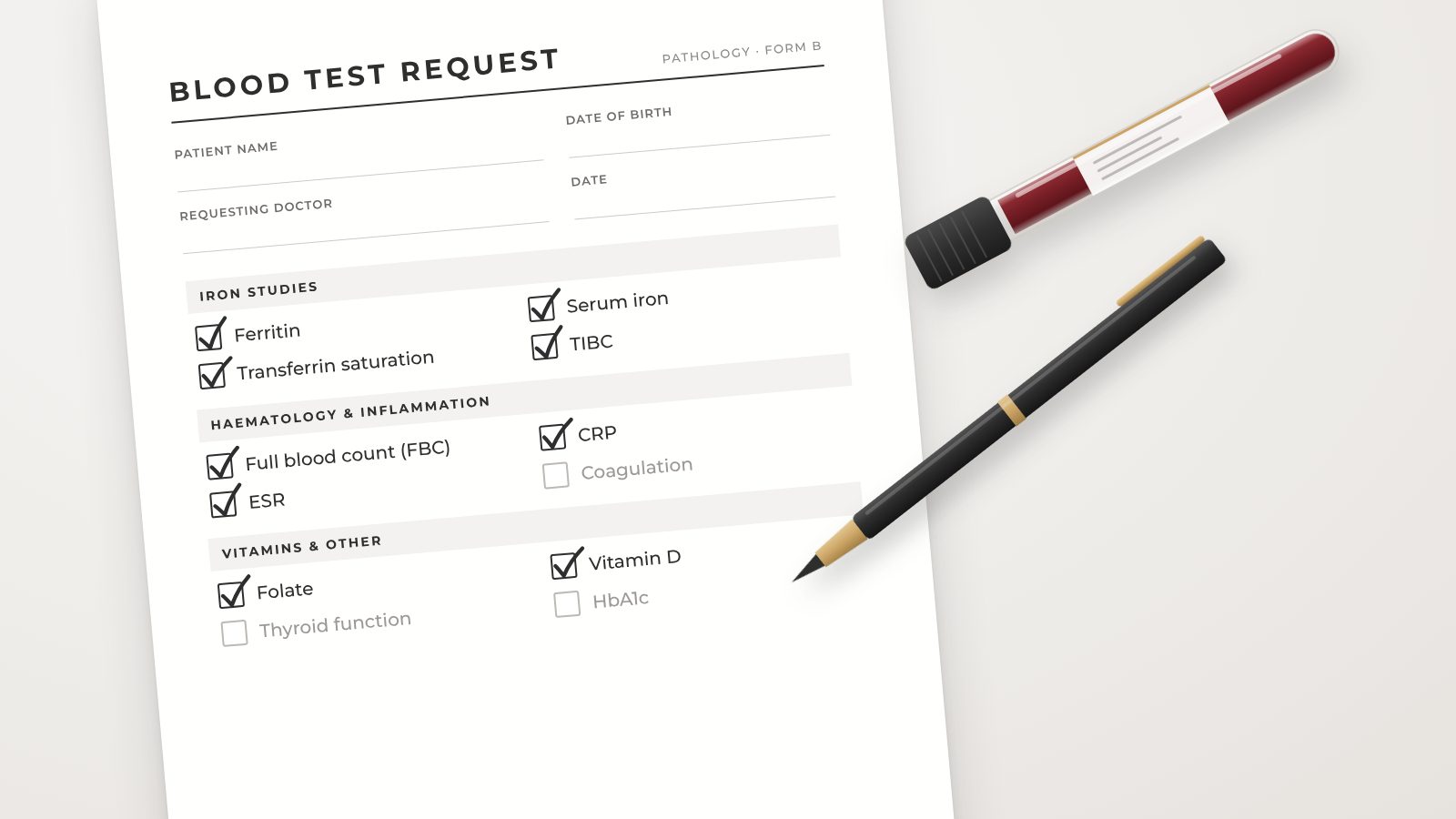
That's why, at 23MD, ferritin is rarely tested alone. Dr Galy checks it as part of a wider panel, as in our 360 Longevity assessment:
| Test | What it tells us |
|---|---|
| Ferritin | How much iron is stored |
| Serum iron | How much iron is in the blood right now |
| Transferrin saturation | How much iron is available to the body |
| Total iron binding capacity (TIBC) | How hard the body is working to carry iron |
| Full blood count (FBC) | Whether you are anaemic, and the size of your red blood cells, which helps show the type of anaemia |
| CRP and ESR | Whether there is inflammation in the body, which can push ferritin up and hide low iron |
| Folate | Whether a lack of folate, which causes similar symptoms, is part of the picture |
| Vitamin D | Another common, easily missed cause of low energy, which Dr Galy checks routinely |
Reading these together gives a much clearer answer than any one result. A "normal" ferritin doesn't always rule out low iron, for example when inflammation is pushing it up, which is why the inflammation markers CRP and ESR are checked alongside it [4][6].
Should you take iron supplements if you think you have ferritin face?
No, not without a blood test first. Dr Galy says the biggest mistake he sees is self-medication. Taking iron you don't need, or too much of it, can cause side effects such as constipation, nausea, tummy pain and very dark stools [3]. Iron can also build up in the body when taken in large amounts, which matters most for people with haemochromatosis, an inherited condition in which iron accumulates [3].
Most seriously, treating yourself can hide the real problem. Low iron always has a cause, such as heavy periods, a diet low in iron, poor absorption or blood loss from the gut [1][2]. About a third of men and post-menopausal women with iron deficiency anaemia have an underlying problem, most often in the digestive tract [2]. If you take iron without finding out why it was low, that cause can be missed.
What if your bloods are normal but you still have dark circles?
If your bloods are normal, dark circles usually come from something other than iron, such as genetics, thin skin under the eyes, pigmentation or changes in volume with age. After an assessment, one of our doctors can talk you through the options, which may include creams, injectable treatments and LED light therapy, depending on the cause. Suitability and results vary, and the doctor discusses the benefits and risks with you. Book an assessment with one of our doctors on WhatsApp: London · Dubai.
The 23MD view
"I'm glad people are paying attention to their iron. But your face can only raise the question; it can't answer it. Paleness, dark circles and tiredness have many causes. A proper blood panel tells us whether iron is really low, and if it is, the next job is to find out why before anyone starts taking supplements." – Dr Martin Galy
Who this is for, and who it isn't for
For you if you've felt tired for weeks, look paler than usual, have cracks at the corners of your mouth, or have heavy periods or a diet low in iron.
Less relevant if you've had dark circles all your life with no other symptoms, which is more often down to genetics or skin structure than iron.
Symptoms alone don't mean you need treatment. A doctor interprets your results with your history and discusses the options with you.
Frequently asked questions
Is "ferritin face" real?
Partly. Low iron can make skin look pale and tired, but "ferritin face" is a social media term, not a diagnosis, and the same look has many other causes [1].
Can low iron cause dark circles under your eyes?
It can make them more noticeable. Low iron can make skin paler, and pale skin makes dark areas around the eyes stand out. Dark circles on their own are more often due to genetics, sleep or skin structure.
What are the first signs of low ferritin?
Usually tiredness. Pale skin and cracks at the corners of the mouth are other common signs that lead doctors to check iron.
What blood test checks ferritin?
A ferritin blood test, ideally as part of a wider panel: serum iron, transferrin saturation, TIBC, a full blood count, the inflammation markers CRP and ESR, folate and vitamin D. Together they show stored and available iron, whether you are anaemic, and whether inflammation is affecting the result [2][4][6].
Should I take iron supplements for tiredness?
Not without a blood test. Unnecessary iron can cause side effects and can hide the real reason your iron is low [2][3].
Can I have my bloods checked in London and Dubai?
Yes. Ferritin testing is available at both 23MD clinics, and our doctors can see your notes in both, so your results follow you.
Talk to a 23MD doctor
If you're tired, pale or simply curious about your iron, a doctor-led blood test gives you a real answer. Book a consultation with Dr Martin Galy.
- London23 Elystan Street, Chelsea, London SW3 3NTMessage our London team on WhatsApp
- DubaiThe Court Residence, 39B Street, Jumeirah 1, DubaiMessage our Dubai team on WhatsApp
Related reading: Menopause symptoms: body and skin changes, and what helps
23MD is a doctor-led clinic in Chelsea, London (since 2015) and Jumeirah 1, Dubai (since 2023).
References
- MDLinx. Patients are asking about "ferritin face": the clinical issue goes beyond appearance. 27 August 2026.
- Snook J, Bhala N, Beales ILP, et al. British Society of Gastroenterology guidelines for the management of iron deficiency anaemia in adults. Gut. 2021;70(11):2030–51. Full text: gut.bmj.com.
- National Institutes of Health, Office of Dietary Supplements. Iron: fact sheet for health professionals.
- GPnotebook. Ferritin: how ferritin levels may be raised as an acute-phase protein.
- DermNet. Angular cheilitis.
- Ubie Health (doctor-reviewed). Anaemia of inflammation vs iron deficiency: what ferritin can hide.