The consultation: what 23MD asks before it offers
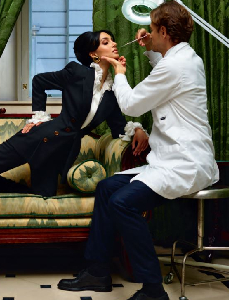
Quick answer: A 23MD consultation is a medical assessment that comes before any recommendation. A doctor takes your medical history and asks about your lifestyle, past treatments and goals, examines your face and skin, and, where relevant, checks your hormones and body composition. You leave with a written plan, usually staged over three to six months, which may include waiting, a referral or no treatment at all.
Ready to book a consultation? Message our team on WhatsApp: London · Dubai
Why does the consultation matter so much?
In aesthetic medicine, most of the outcome is decided before a needle or device touches the skin. The right treatment in the wrong order, or the right treatment for the wrong reason, rarely gives a result a patient is happy with. That is why we treat the consultation as the most important appointment, and why it is always with a doctor.
What will the doctor ask you?
- Your medical history: past and current conditions, operations, allergies and family history.
- Your medicines and supplements: including anything that affects bleeding, healing or hormones.
- How you live: sleep, exercise, nutrition, stress, smoking and sun exposure, all of which show in the skin.
- Previous treatments: what you have had, where, how it went, and anything you were advised against.
- What you want, and by when: the change you hope for, how you would like to look in five years, and any events or deadlines, especially Any upcoming live events of public appearances
- MOST IMPORTANTLY : What do you like now, or did you like about your features in the past : most people find this a very difficult question
What will the doctor examine?
The doctor examines your face in good clinical light, at rest and in movement, and looks closely at the skin. We read four dimensions: skin, structure, movement and personality, explained in Reading a face: the four dimensions before any intervention. Where it is relevant and has not been done recently, the doctor may suggest a hormone blood test, and in some cases a body composition assessment.
Why does 23MD ask about hormones at a skin consultation?
Hormones change the skin. A 2025 clinical review estimates that women lose about 30% of their skin collagen in the first five years after the menopause [3]. Treating the skin without knowing that context can mean treating the effect rather than the cause. We explain this in more detail in Why hormones are read before the skin is treated. A hormone test is offered only when it is relevant to you; it is not a condition of treatment.
Why might the plan include waiting, referral or no treatment?
UK doctors who offer cosmetic procedures must follow General Medical Council guidance, which includes seeking consent themselves, giving patients time to reflect so they can make an informed decision, and taking into account each patient's vulnerabilities and psychological needs [1]. That shapes how we work. You are not asked to decide on the day.
Sometimes the right advice is not a treatment. A concern may be better treated by a colleague, or by surgery, which 23MD offers in Dubai by referral. A life event may make it better to wait. And for some people, the worry about their appearance is out of proportion to what others see. Body dysmorphic disorder affects around 1 in 10 people seeking aesthetic treatment, according to a 2025 systematic review, and many do not feel better after treatment [2]. In those cases the kindest advice is support, not a procedure. Our approach to saying no is set out in What 23MD won't do, and why.
What happens after the consultation?
You receive a written plan. For most patients it is staged over three to six months, with treatments chosen to work together and spaced so that each can settle before the next; we explain why in Treatment stacking. The plan lists what each step is for, what it can and cannot achieve, and its risks. You can take it away, ask questions and decide in your own time.
Want to think about your goals before you come in? Our Treatment Stacker asks about your goal, timeline and clinic and drafts a possible sequence for a 23MD doctor to review. This is not a medical diagnosis. A 23MD doctor will confirm suitability at your consultation.
How to prepare for your consultation
- A list of your medicines and supplements, with doses.
- Details of previous aesthetic treatments: what, where and when, if you know.
- Any recent blood test results.
- Your questions, and anything you are unsure or worried about.
The 23MD view
I would rather spend longer understanding a patient than treat them quickly. The consultation is where we learn what someone actually wants, which is not always what they first ask for, and where we agree what is realistic. Sometimes the most useful thing I can do is advise against treatment.
Frequently asked questions
How long is a 23MD consultation?
A first consultation usually takes 45 to 60 minutes.
Will I have treatment at my first appointment?
Not usually. We prefer that you take time to consider the plan before starting [1].
Is the consultation with a doctor?
Yes. Every 23MD consultation is with a doctor.
Can I have a consultation in London and Dubai?
Yes. Consultations are available at both clinics, though some treatments are offered at only one of them.
Talk to a 23MD doctor
- Message our London team on WhatsApp · 23 Elystan Street, Chelsea, London
- Message our Dubai team on WhatsApp · The Court Residence, 39B Street, Jumeirah 1, Dubai
23MD is a doctor-led clinic in Chelsea, London (since 2015) and Jumeirah 1, Dubai (since 2023).
Sources
- General Medical Council. Guidance for doctors who offer cosmetic interventions. Effective 1 June 2016, updated 13 December 2024.
- Peso Navarro IMM, Cossio CM, Cerdan CG, et al. Prevalence of body dysmorphic disorder in the aesthetic medicine practice: a systematic review. European Psychiatry, 2025;68(Suppl 1):S914.
- DeGiovanni C. Managing menopausal skin: a clinician's review. EMJ Dermatology, 2025;13(1):90–4.