What regeneration looks like in five years
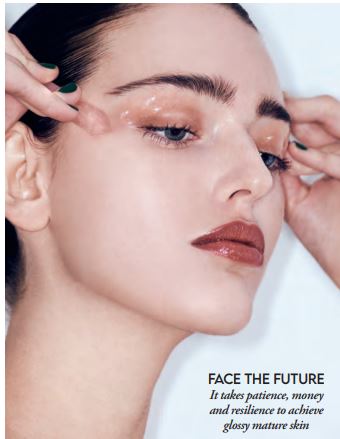
Quick answer: Over the next five years, regenerative aesthetic medicine is likely to mean treatments that support the skin's own repair, such as polynucleotides, skin boosters and exosomes applied to the skin, combined over time and guided by better assessment, including hormone health. Much of the evidence is still early. 23MD adopts a new approach only when the evidence supports it and regulation allows it.
Questions about regenerative treatments? Message our team on WhatsApp: London · Dubai
What does "regeneration" mean in aesthetic medicine?
Regenerative treatments aim to improve the quality of the skin itself: its collagen, elasticity and hydration. Replacement treatments, such as dermal filler, add something the face has lost, usually volume. Both have a place, but they answer different problems. Our position is set out in Regeneration over replacement.
What happens to skin over five years without treatment?
Skin keeps ageing whatever we do: collagen falls, the skin thins and elasticity declines, faster with sun exposure and smoking. For women, the menopause marks a sharp change. A 2025 clinical review in EMJ Dermatology estimates that women lose about 30% of their skin collagen in the first five years after the menopause, a loss that tracks the length of oestrogen deficiency more closely than age [1]. That is why a five-year view matters, and why we look at hormones before the skin is treated.
Which directions in regenerative medicine are worth following?
Regenerative injectables with emerging evidence. Polynucleotides are injectable gels of purified DNA fragments that aim to support the skin's repair. A 2026 systematic review and meta-analysis of five randomised trials, involving 315 patients, found improvements in texture, elasticity and hydration compared with placebo, and results similar to hyaluronic acid; the authors called for larger and longer studies [2]. Results are thought to last roughly 6 to 12 months, so maintenance is planned [3]. Skin boosters, which place hyaluronic acid within the skin, have a longer track record for hydration [3].
Exosomes, used carefully. Exosomes are tiny particles released by cells that carry signalling molecules, and they are being studied for skin repair. The evidence is early, and the US Food and Drug Administration states that there are currently no approved exosome products [4]. At 23MD, exosomes are applied to the surface of the skin only; they are never injected.
Combining treatments over time. Several measured treatments, spaced over weeks and repeated over years, tend to suit regenerative care better than one large intervention. We explain the approach in Treatment stacking.
Which directions are we watching but not adopting?
Unapproved stem cell and exosome injections. Clinics abroad and online sell stem cell and exosome injections for skin and many other conditions. The FDA notes that the only approved stem cell products are blood-forming stem cells for blood disorders, and that some products are illegally marketed and have not been shown to be safe or effective [4].
"Biological age" and senescence tests as treatment targets. Tests that claim to measure how fast you are ageing are an active research field. A 2023 consensus paper in Cell concluded that a lack of agreed standards is holding back their validation for clinical use [5]. They may become useful; for now they are not a sound basis for choosing or selling treatment.
Anything described as a miracle. Regeneration is gradual and modest by nature. Claims of dramatic or permanent results are a reason for caution.
What might be standard by 2030?
This is our expectation, not a certainty. We think good practice will begin with an assessment of skin quality, facial structure and, where relevant, hormonal and metabolic health; that regenerative treatments will be used as ongoing maintenance; and that filler and other replacement treatments will be kept for clear structural needs. Hormone treatment will remain a medical decision for those who need it, not a routine part of aesthetic care.
The 23MD view
We follow regenerative medicine closely, and we are enthusiastic about where it is heading. But we adopt a new treatment only when the evidence supports it and regulation allows it, and we tell patients plainly when the evidence is still early. The patient is not a test subject. In five years we expect to be offering some treatments that do not exist yet, and to have declined many more.
Who this is for, and who it isn't for
- May suit: people who want gradual improvement in skin quality and are happy to plan treatment over months and years, including women approaching or past the menopause.
- Less likely to suit: anyone looking for a dramatic or immediate change, or for a single treatment that replaces surgery.
- Needs a doctor's assessment first: pregnancy or breastfeeding, active skin infection, autoimmune conditions, or allergy to any treatment component. Suitability and results vary, and your doctor will explain the benefits and risks.
Talk to a 23MD doctor
If you would like a plan for your skin over the next five years, our doctors are happy to talk it through.
- Message our London team on WhatsApp · 23 Elystan Street, Chelsea, London
- Message our Dubai team on WhatsApp · The Court Residence, 39B Street, Jumeirah 1, Dubai
23MD is a doctor-led clinic in Chelsea, London (since 2015) and Jumeirah 1, Dubai (since 2023).
Sources
- DeGiovanni C. Managing menopausal skin: a clinician's review. EMJ Dermatology, 2025;13(1):90–4.
- Torres-García SY, Vásquez-Tirado GA, Bardales-Zuta VH, et al. Efficacy and safety of polynucleotides in aesthetic medicine: systematic review and meta-analysis (in Spanish). Piel, 2026;41:331–9.
- Rho NK, Kim HS, Kim SY, Lee W. Injectable "skin boosters" in aging skin rejuvenation: a current overview. Archives of Plastic Surgery, 2024;51(6):528–41.
- US Food and Drug Administration. Consumer alert on regenerative medicine products including stem cells and exosomes.
- Moqri M, Herzog C, Poganik JR, et al. Biomarkers of aging for the identification and evaluation of longevity interventions. Cell, 2023;186(18):3758–75.