Hyperhidrosis: causes, symptoms and treatment options
Hyperhidrosis means sweating more than the body needs to cool down. A doctor-reviewed guide to symptoms, causes, when to see a GP and treatment options.
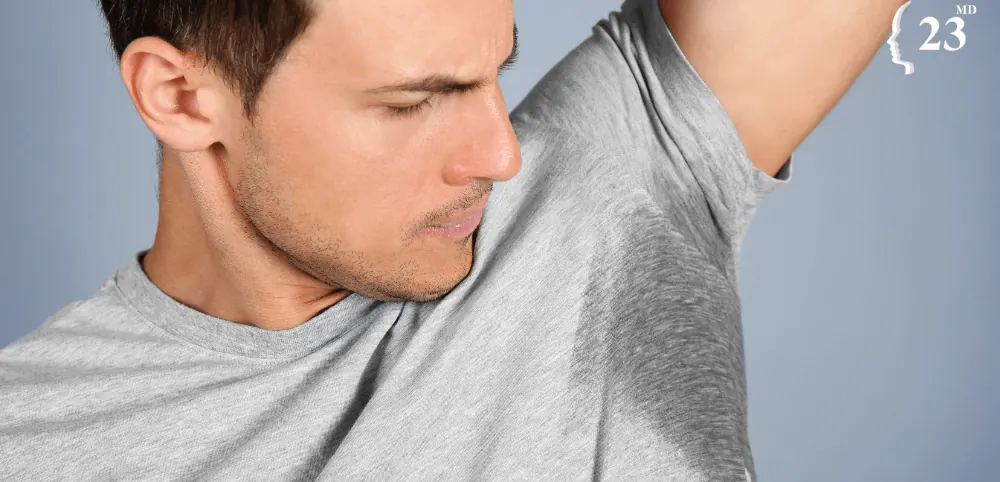
Quick answer: Hyperhidrosis means sweating more than your body needs to stay cool. It usually affects the underarms, palms, soles of the feet or face, and often starts in childhood or the teenage years. It is rarely a sign of anything serious, but it can make everyday life harder. Treatment usually starts with stronger antiperspirants and simple changes. Specialist options are available if these are not enough.
What is hyperhidrosis?
Sweating is how the body cools down. Nerves signal the sweat glands to release sweat when you are hot, active or anxious. In hyperhidrosis, the glands produce sweat when the body does not need cooling, sometimes even at rest or in a cool room.
Doctors describe two main types:
- Primary (focal) hyperhidrosis has no underlying cause. It affects specific areas such as the underarms, palms, soles, face or scalp, and usually begins in childhood or adolescence. Up to a third of people with it have a family member who has it too.
- Secondary hyperhidrosis is linked to another condition or a medicine. Possible causes include infections, hormonal changes such as the menopause, diabetes, an overactive thyroid and some medicines, including certain antidepressants. It often affects the whole body.
Anxiety can make either type worse.
What are the symptoms?
The main sign is sweating that is out of proportion to heat or activity, and that happens regularly. You may notice:
- sweat soaking through clothes or leaving visible patches
- damp palms that make it hard to hold a pen, use a keyboard or shake hands
- wet socks and softened skin on the feet
- changing clothes or showering several times a day
Many people also find that sweating affects their confidence at work or in social situations.
When should you see a doctor?
The NHS advises seeing a GP if you are sweating excessively and:
- things you can do yourself are not helping
- it has lasted at least 6 months
- it stops you getting on with daily activities
- it happens at least once a week
- it happens at night (night sweats)
- you have a family history of excessive sweating
- you are taking medicine for another condition
Sweating across the whole body, or at night, should always be checked. It can be linked to another condition or to a medicine. In that case, the cause is investigated and treated first. Night sweats around the menopause and perimenopause are common, and a hormone assessment may be part of that conversation.
What can you do yourself?
Small changes can make a noticeable difference:
- wear loose clothing in natural fabrics, and avoid tight or synthetic clothes
- choose absorbent socks, change them often and wear leather shoes rather than enclosed sports shoes
- cut down on alcohol and spicy food if they seem to trigger sweating
- ask a pharmacist about stronger antiperspirants, sweat shields and foot powders
Stronger antiperspirants containing aluminium chloride are usually the first treatment. They are applied at night to completely dry skin. They can sting, so avoid shaving for 12 hours before or after applying them.
Hyperhidrosis treatment at 23MD
At 23MD, excessive sweating is assessed by a doctor at our clinics in Chelsea, London and Jumeirah, Dubai. We treat underarm and palm sweating.
Your first consultation usually takes 30 to 40 minutes. Your doctor takes a full medical history, asks about any medicines you take and checks whether the sweating could have another cause. They will explain the options that may suit you, including treatments that do not involve injections. They will also explain what to expect, possible side effects and how long any effect may last.
Suitability for any treatment is decided at consultation. Results vary between individuals and cannot be guaranteed. Treatment is overseen by Dr Suha Kersh, our founding doctor.
What other treatment options are there for excessive sweating?
The right choice depends on which areas are affected, how severe the sweating is and your general health.
- Iontophoresis: the hands, feet or underarms are placed in water while a mild electric current passes through it. It needs a course of regular sessions.
- Prescription creams: some medicated creams can reduce sweating on areas such as the face, scalp or underarms.
- Prescription tablets: these reduce sweating across the body, but side effects such as a dry mouth are common.
- Microwave-based device treatment: used for the underarms to reduce the number of sweat glands, without surgery.
- Surgery: removing underarm sweat glands, or a nerve procedure for severe cases. Surgery is considered only when other options have failed, and carries significant risks, including increased sweating elsewhere on the body.
Frequently asked questions
Is hyperhidrosis common?
Yes. Excessive sweating is common. A GP or dermatologist can confirm whether your sweating fits the condition.
Can hyperhidrosis go away on its own?
Sometimes it improves with age, but many people need ongoing management.
Is excessive sweating a sign of something serious?
Primary hyperhidrosis is not dangerous. Sweating across the whole body, at night or starting alongside other symptoms should be checked by a GP.
Will treatment stop sweating permanently?
Most non-surgical treatments control sweating rather than cure it, so they are repeated or continued over time. Your doctor will explain what to expect.
Next steps
If excessive sweating is affecting your day-to-day life, our team can arrange a consultation with a doctor. Message us on WhatsApp: 23MD London or 23MD Dubai.
References
- NHS. Excessive sweating (hyperhidrosis).
- British Association of Dermatologists, Patient Hub. Hyperhidrosis (updated May 2022).
- NICE. Evidence summary ES10: introduction and current guidance on hyperhidrosis.
- NHS 111 Wales. Sweating (excessive sweating, hyperhidrosis).