
Can Mitochondrial Disease Be Treated
What are Mitochondria? Mitochondria are the batteries in our cells that supply us with energy. Their function is essential to generate the fuel that enable
What are Mitochondria?
Mitochondria are the batteries in our cells that supply us with energy. Their function is essential to generate the fuel that enables our cells to function. Errors in the genetic code, as well as illness and inflammation, which impair the ability to make energy can affect the functioning of any organ.
Essentially, mitochondria controls the ability of our whole body to function efficiently, by supplying us wth adequate energy.
What do Mitochondria do for us?
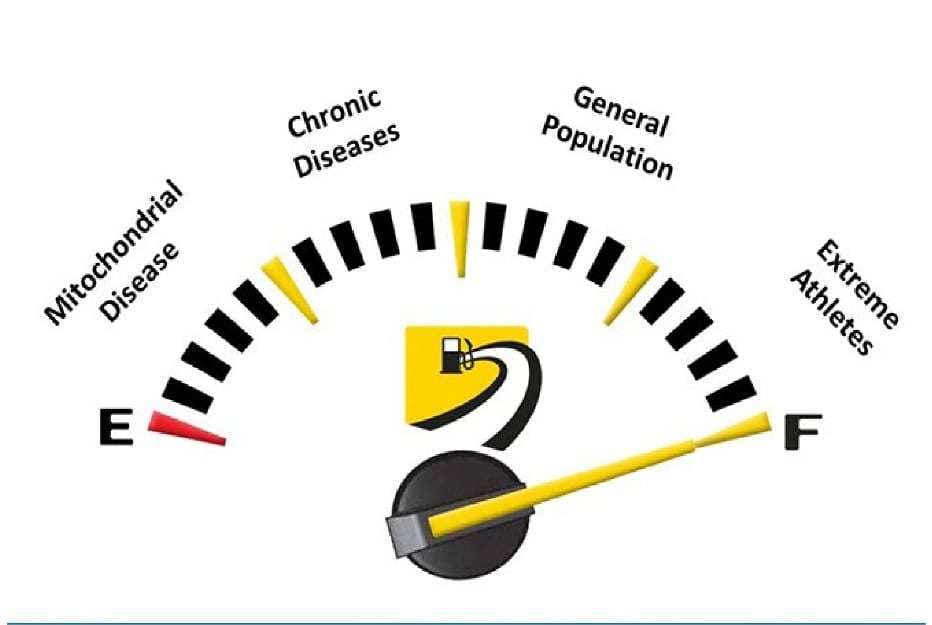
To use the analogy of a fuel gauge, patients with mitochondrial disease in the fuel gauge model would be all the way to the left, at their best, starting with a low level of energy which falls even lower in response to stressors or activity.
Low Mitochondrial Function = Exhaustion = “Running on E”
Good Mitochondrial Function = Peak Performance = “Full Tank”
What can cause damage to our Mitochondria?
It is important to recognize that many conditions that cause inflammation, even those in which the genetic code for the mitochondria might be normal, can ultimately impair the function of the mitochondria.
This includes conditions such as diabetes, metabolic syndrome, or cancer, in which mitochondrial energy production can also fail. Other less obvious causes of damage can include oxidative stress from overeating, carbohydrate excess, food sensitivities, lack of exercise, smoking and other environmental toxins.
Additionally, neurodegenerative disorders such as Alzheimer’s or Parkinson’s disease can involve failure of mitochondrial function that will subsequently cause neurologic symptoms.
Mitochondria can also, over time, become innocent bystanders in common, chronic diseases, and sustain significant impairment.
How can we keep Mitochondria healthy ?
Unfortunately, at this time, there are no proven therapies or cures for mitochondrial disease. This is because Mitochondrial disease is really a constellation of hundreds of different disorders. It therefore makes sense that grouping them all together may not be the most straightforward way to identify a common therapy for specific subsets.
Combining good diet and appropriate exercise with a prescription of some supplements outlined below, can help restore mitochondrial efficiency.
Exercise
It is known that exercise is a definite therapy in mitochondrial disease, as long as the patient can tolerate it based upon their overall health, such as heart and kidney function. Exercise is valuable both aerobically and anaerobically. Exercise can help make more mitochondria and can shift the levels of errors in the mitochondrial DNA that arise in some patients to a lower amount, thereby increasing the function of those mitochondria produced from good mitochondrial DNA.
Nutrition
It is also increasingly recognized that nutrition and vitamins are very important to the functioning of the mitochondrial electron transport chain and all of the enzymes within it. At this time, we don’t understand the precise optimal diet for any one patient with mitochondrial disease, but we recognize that it is a key factor in optimizing their health and outcomes. In general, glycemic index of food can be used to predict the sugar loading effect after consumption. The higher the sugar loading, the higher the possible inflammatory response. So its best always to keep to a medium to low glycemic diet.
Reduce Inflammation
At 23MD, Dr Galy uses the ALCAT blood testing system to check what food you might be having an inflammatory response to ( not allergic response), which can impact negatively on mitochondrial function.
Supplements
Commonly, people are told to take a mitochondrial medicine cocktail. This is an empirically based combination of vitamins, cofactors, and nutrients that are known to replace deficiencies that occur when the mitochondrial energy production system fails and to help its residual function.
- Antioxidants
- Coenzyme Q 10
- Ubiquinol
- Vit D
- Vit C
- Vit E
- Alpha lipoic acid
- Agents that increase free coenzyme Q10 pool
- Coenzyme Q 10
- Ubiquinol
- Carnitine
- Pantothenate
- Enzyme co-factors
- Coenzyme Q 10
- Ubiquinol
- Vit B1
- Vit B2
- Metabolite therapies
- Arginine
- Folinic acid
- Creatine
- Enzyme activators
- Dichloroacetate
The Future of Therapy
A precision medicine approach for mitochondrial disease, involves starting with understanding the cause in each individual patient’s body.
When the precise genetic cause is identified, or certain subclasses of disease are recognized, models can be created either in the patient’s own cells or in invertebrate and vertebrate animal models. These will help to better understand the way in which the biochemistry has caused a problem and how the survival of the animal or the functions of the organs and organisms are impaired. From there, therapies such as mitochondrial medicine supplement regimens, nutrients, and exercise can be tested to precisely understand whether they are helpful or harmful in any one type of mitochondrial disease.
Additionally, new compounds could be screened to more quickly and effectively identify therapies that are precisely matched to each patient’s metabolism and their disease.
It is now recognized that mitochondrial function affects all of us and that there are things we can all do to optimize our mitochondrial health. Our decisions about nutrition and exercise make a big difference in our mitochondrial energy health and our ability to function optimally. It is known that our mitochondrial energy falls as we age.
Exercise and nutrition can reverse these outcomes and improve health.
Phase contact us here to make an appointment for your assessment
References
1Parikh S, Saneto R, Falk MJ, Anselm I, Cohen BH, Haas R, Medicine Society TM. A modern approach to the treatment of mitochondrial disease. Curr Treat Options Neurol. 2009;11:414-430. Abstract
2Parikh S, Goldstein A, Karaa A, et al. Patient care standards for primary mitochondrial disease: a consensus statement from the Mitochondrial Medicine Society. Genet Med. 2017;19. doi: 10.1038/gim.2017.107. Article Accessed February 22, 2018.